

0
Items
$0.00
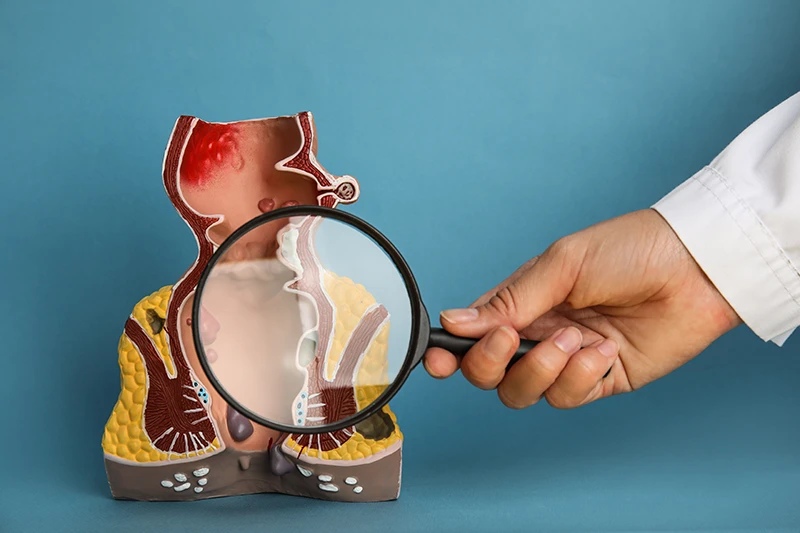
We don't sell. We educate.
Weekly science about sex, delivered to your inbox.
Even if you’ve never had anal sex.
I’m the founder of Shameless Care, and one of the most common questions we get when someone opens their test kit is: “Why is there an anal swab? I don’t have anal sex.” It’s a reasonable question. It’s also one of the places where the science has quietly run far ahead of what most people — and honestly, a lot of clinicians — assume.
Here’s the short version: rectal chlamydia and gonorrhea show up in people who have never had receptive anal sex, at rates that are hard to ignore. Most of these infections cause no symptoms. Most are missed if we only test urine or the vagina. And if they’re missed, they don’t just sit there politely — they can reinfect you, reinfect a partner you just treated, and keep circulating in ways that cervical or urethral testing alone will never catch. That’s why the anal swab is included in every Shameless Care test, at no extra charge. Sex is fun. It’s also, frankly, a little messy — anatomically and epidemiologically. A complete test respects that.
The best evidence here is a 2018 systematic review and meta-analysis by Chandra and colleagues covering 14 studies of women at sexual health clinics. Two findings stand out. First, rectal chlamydia was detected in roughly 6% of routine clinic-attending women. Second — and this is the part that matters — reporting anal intercourse was not associated with testing positive rectally (summary risk ratio 0.90, 95% CI 0.75–1.10). Asking “do you have anal sex?” simply doesn’t sort women into rectal-positive and rectal-negative groups.
A Dutch study by van Liere and colleagues that universally tested 654 women at an STI clinic found the same thing even more starkly: 8.6% of women who reported no anal sex, no anal symptoms, and no anal fingering or toy use had rectal chlamydia — essentially identical to the 7.9% among women who did report those exposures. Seventy-one percent of all the rectal chlamydia infections in that study came from women who “shouldn’t” have had them by exposure history.
It’s not just chlamydia. A 2024 analysis in The Lancet Microbe using Dutch national surveillance data found that more than 70% of women diagnosed with gonorrhea also had anorectal gonorrhea, whether or not they reported anal sex.
Men denying any receptive anal contact have a lower but nonzero rate. A carefully done Indianapolis STI clinic study by Jordan and colleagues found rectal chlamydia in 2.4% of heterosexual men who denied all receptive anal behaviors — including anal play, toys, and rimming. Cunnilingus was the exposure associated with rectal positivity in these men, which points us toward mechanism.
There are three leading explanations, and they’re probably all partially true.
Autoinoculation from vaginal secretions. This is the leading hypothesis for women. The vagina and the anus are, on average, about three centimeters apart. Secretions move. Wiping moves things. Sex moves things. Mathematical modeling and macaque studies summarized in a 2021 review by Craig-Kuhn and colleagues suggest that up to 87% of rectal chlamydia in women may originate from an existing urogenital infection tracking a few centimeters over. Roughly 68% of women with cervical chlamydia also test positive rectally. It’s the same reason women get urinary tract infections from gut bacteria — proximity wins.
The gut as a quiet reservoir. In a series of mouse studies, Yeruva, Rank and colleagues showed that Chlamydia given by mouth survives the stomach and colonizes the cecum and colon for at least 100 days, without causing symptoms. Human intestinal biopsy studies have detected chlamydial DNA in gut tissue. We can’t yet say this is the whole story in humans, but it’s a biologically serious hypothesis — and it matches what clinicians see: rectal infections that are stubborn and that reappear after the cervix looks clear.
Oral and peri-anal routes. Cunnilingus, rimming, fingering, and shared toys can all deposit organisms at or near the anus without penile-anal intercourse. A 2017 hypothesis paper by Bavoil and colleagues argues that chlamydia was originally a gut pathogen spread fecal-orally, and that oral sex reintroduces it along the same route. In a 2023 study of MSM who denied anal sex entirely, Barbee and colleagues found 14.1% rectal positivity, with peri-anal play the strongest behavioral link.
The single most important thing to understand about rectal CT and NG is that they are almost always silent. In Hunte and colleagues’ study, only 12.5% of women with rectal chlamydia reported any anal symptoms — meaning 87.5% had no idea anything was wrong. Systematic reviews put the asymptomatic rate above 85% across populations. There is no itch, no discharge, no twinge to tip you off. The only way to find a rectal infection is to look for one.
And when we don’t look at the rectum, we miss a lot of infection that’s actually there. In a study of nearly 1,900 women tested at all three anatomical sites, 46.5% of women with a positive rectal chlamydia or gonorrhea test had a negative genital test on the same visit — nearly half would have been falsely reassured by urine or vaginal swab alone. A separate analysis of more than 2,000 women attending Los Angeles STD clinics found that 25% of chlamydia infections and 19% of gonorrhea infections were rectal-only. These aren’t outlier numbers — they’re consistent across settings.
Here’s the scenario every patient should understand: you can test negative on your throat and genital swabs and still have chlamydia or gonorrhea living in your rectum. If you skip the anal swab, you get a result that says “clear” when you’re not. Two things follow from that, and both matter.
The rectal infection itself can hurt you. Even when silent, rectal chlamydia and gonorrhea can cause proctitis, rectal bleeding, pain with bowel movements, discharge, and — in the case of certain chlamydia strains — lymphogranuloma venereum (LGV), which can progress to strictures and chronic tissue damage if left alone. Untreated gonorrhea can also disseminate. “Asymptomatic” is not the same as “harmless.”
You can reinfect the sites that just tested clean. This is the part most people don’t know. The CDC’s 2021 STI Treatment Guidelines explicitly warn that an untreated rectal infection can reinfect the cervix through autoinoculation — the same few-centimeter journey that likely got it there in the first place, running in reverse. The same mechanism plausibly applies to the urethra in men and, through oral-genital contact, to the throat. A clean genital test today doesn’t mean a clean genital test next month if the rectum is still colonized. Put differently: the swab you skipped can undo the test you paid for.
And the ripple effects don’t stop with you. An untreated rectal infection can transmit to partners, and the whole cycle — treat, retest, reinfect — starts over.
Professional guidelines are still catching up. The CDC recommends rectal testing in women “based on reported sexual behaviors…through shared clinical decision-making,” and flatly notes that rectal chlamydia “was not associated with report of receptive anorectal sexual activity.” A growing body of commentary in Sex Transm Infect and Sex Transm Dis through 2024–2025 argues explicitly that exposure-based screening misses too much and that extragenital testing should be offered to everyone. We agree.
I know the word “anal swab” is doing a lot of work in your imagination right now. Look at the picture.
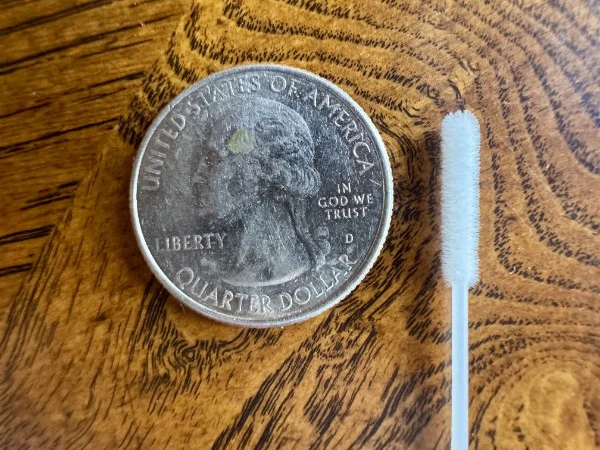
It’s a thin, smooth, flexible stick — smaller than a pinky finger. You insert it about an inch past the anal opening, rotate for a few seconds, and pull it out. There’s no speculum, no provider, no audience. Most people describe it as “weird for a second” and then done. If you can insert a tampon, you can do this. If you’ve never inserted a tampon, you can still do this — we include step-by-step directions in every kit.
The anal swab is in your Shameless Care test because the science says it belongs there. Rectal chlamydia and gonorrhea are common in people who have never had anal sex, they almost never cause symptoms, and they are routinely missed by urine or vaginal testing alone. Skipping the anal swab is skipping up to a fifth of the answer your test was supposed to give you.
It’s included in the price. It takes under a minute. Please use it.