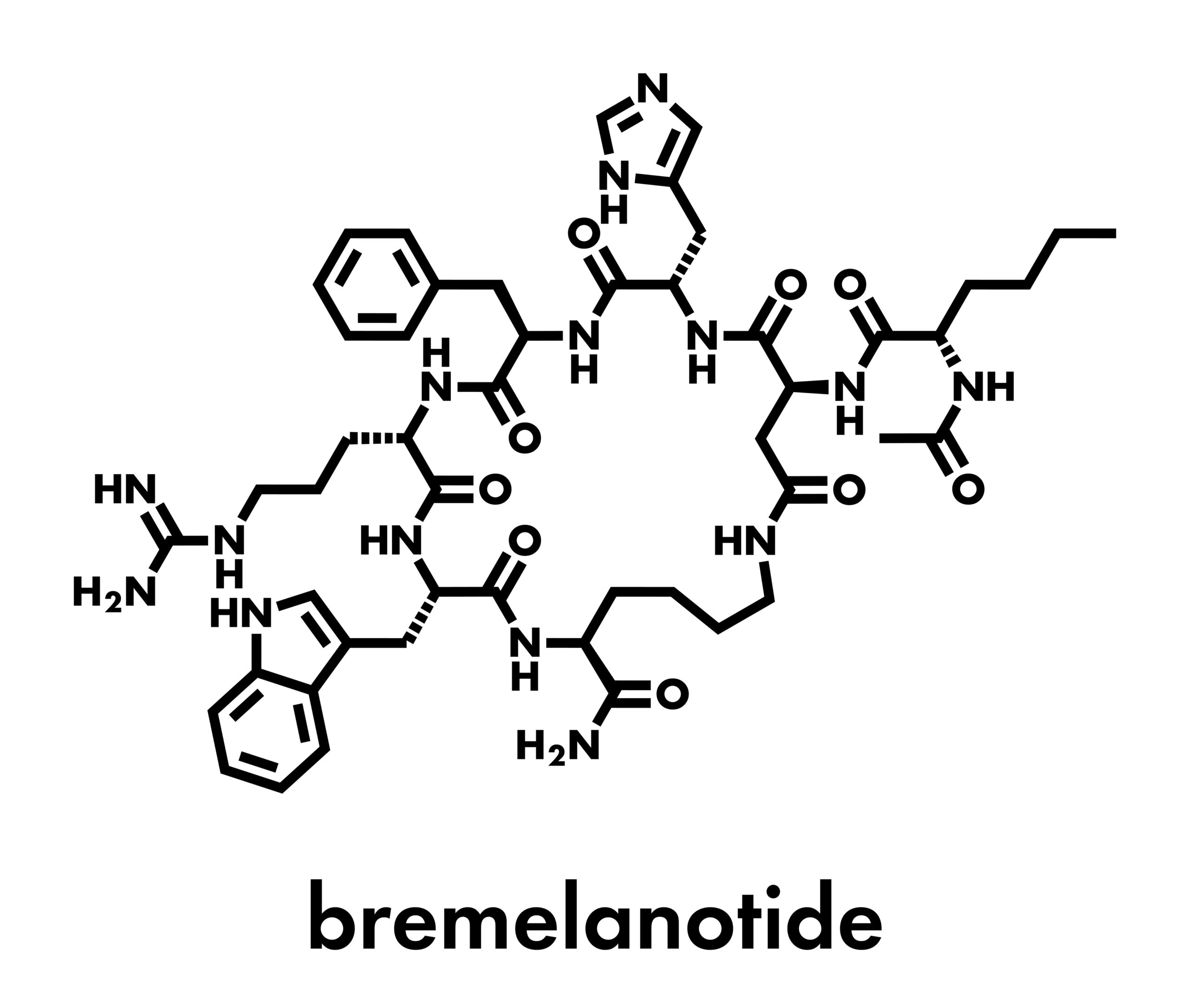
What Bremelanotide Is, How It Works, and Why It Matters for Sexual Health
Bremelanotide is a fascinating newer therapy with an unusual origin and a modern purpose in sexual medicine. It’s a synthetic peptide (originally known as PT-141) that acts as a melanocortin receptor agonist – meaning it stimulates specific receptors in the brain involved in sexual arousal1 . Unlike standard erectile dysfunction (ED) drugs such as sildenafil (Viagra), which work by improving blood flow in the genitals, bremelanotide works centrally. In simpler terms, it targets the brain’s arousal pathways rather than just the body’s blood vessels2 . By activating melanocortin receptors (notably the MC4 receptor) in the hypothalamus, bremelanotide helps “turn on” the neural circuits of desire and arousal 3. This central mechanism is why bremelanotide can improve sexual interest and responsiveness – it essentially boosts the mind’s willingness and excitement for sex.
Why does this matter for sexual health? Because many sexual difficulties aren’t purely physical. There are cases where the body is capable, but the brain’s signaling is weak – for example, low libido, performance anxiety, or psychogenic ED (erections impeded by psychological factors). Bremelanotide offers a new way to address those issues by rekindling the brain’s natural sexual excitation. It stimulates arousal via melanocortin receptors, leading to increased dopamine and other pro-sexual neurochemicals in the brain 45 . Essentially, it helps people feel desire and arousal more readily. This makes bremelanotide especially valuable for individuals whose sexual dysfunction is linked to central factors (like stress, anxiety, or low innate desire) rather than just plumbing or blood flow problems6 . By restoring the psychological spark, it can complement or even substitute for traditional blood-flow ED medications in appropriate patients. In summary, bremelanotide represents a brain-based approach to sexual health – a therapy that matters because it targets the often-overlooked “mental side” of intimacy.
Bremelanotide’s Long Journey: A Brief History and Uses
Bremelanotide’s journey from lab bench to bedroom has been anything but typical. Its story actually begins with the quest for a sunless tanning agent – not a sexual remedy at all. In the 1990s, researchers were studying a compound called Melanotan II, designed to mimic alpha-MSH (a hormone that increases skin pigmentation). During early tests, they noted an unexpected side effect: participants experienced spontaneous erections and increased sexual thoughts7 . This serendipitous discovery prompted scientists at Palatin Technologies to isolate the part of the molecule causing the arousal effect, which was developed as a new peptide drug, PT-141 (later named bremelanotide)8 . In essence, a tanning experiment opened the door to a potential arousal therapy.
Through the early 2000s, bremelanotide was explored in clinical trials for sexual dysfunction in both men and women9 . Initial studies focused on intranasal delivery (a nasal spray), as it was thought to be a convenient on-demand method. Many men with ED and women with low libido were enrolled in these trials. The drug showed promise, effectively triggering erections and sexual desire in a number of participants. However, there was a stumbling block: at higher nasal doses, bremelanotide tended to raise blood pressure in some users10 . In 2007, the FDA put a clinical hold on development due to these cardiovascular side effects. As a result, the manufacturer halted the nasal spray approach around 2007–2008 and reformulated bremelanotide for a different route – subcutaneous injection, which allowed precise dosing with fewer systemic side effects11 .
The injectable form proved successful. After refining the dosage and safety profile, Palatin ran new trials primarily in women with hypoactive sexual desire disorder (HSDD) – a condition of chronically low libido causing distress. Those efforts culminated in 2019 when the FDA approved bremelanotide (brand name Vyleesi) for on-demand treatment of HSDD in premenopausal women12 . This approval was a landmark: bremelanotide became the first melanocortin agonist ever approved for a sexual dysfunction, representing a novel class of therapy13 . Women could self-administer it via an auto-injector pen about 45 minutes before intimacy, to boost their sexual desire.
What about uses beyond female HSDD? Even though bremelanotide isn’t officially approved for men, some healthcare providers have utilized it off-label for male sexual dysfunction. Men with ED – particularly those who don’t respond to PDE5 inhibitors or whose issues are more mental than vascular – have been prescribed bremelanotide in specialized settings1415 . The rationale is the same: bremelanotide can spark the central arousal process, potentially helping men who have the physical capacity for erection but lack the psychological cue or confidence to get started. This off-label use has shown encouraging results in practice, and clinical research in men is ongoing.
It’s also worth noting that the nasal spray formulation of bremelanotide has seen a resurgence via compounding pharmacies and clinics. Many patients prefer a needle-free option, so some modern sexual medicine providers offer bremelanotide nasal sprays as an alternative way to take the drug16 . The nasal route delivers the same peptide into the bloodstream (through the nasal mucosa) and typically works within 30–60 minutes, similar to the injection17 . While the FDA-approved Vyleesi is an injection, these compounded nasal sprays have expanded the usability of bremelanotide, making it more convenient for those averse to injections. Today, bremelanotide’s “long journey” has brought it from a sunless tanning lab oddity to a versatile tool in sexual medicine – used to reignite desire in women, assist men with difficult ED, and generally broaden our approach to treating sexual dysfunction.
A Surprise Discovery: Bremelanotide’s Effect on Sexual Arousal
The effect of bremelanotide on sexual arousal was, as noted, discovered almost by accident. Imagine being a researcher trying to develop a skin tanning drug and finding out it causes erections! In early trials with Melanotan II, male volunteers reported unexpected erections and heightened sexual desire alongside the tanning effects18 . This was the pivotal clue that set bremelanotide’s development in motion. It became clear that stimulating the melanocortin system could ignite sexual arousal in a way entirely different from existing drugs. Scientists confirmed this phenomenon in further studies: lab animals given PT-141 displayed increased mating behaviors and penile erections, indicating a true pharmacological effect on sexual function. By the mid-2000s, bremelanotide was being specifically tested for its pro-sexual properties in humans – and it did not disappoint.
One striking early finding came from trials in men with ED. In some of the first studies, even men who had not been helped by Viagra showed improvement with intranasal bremelanotide. For instance, a 2008 randomized trial in men with “Viagra-resistant” ED found that about 33% of those who used bremelanotide (at a 10 mg nasal dose) achieved erections sufficient for intercourse, compared to only about 8% on placebo19 . Remember, these men had failed to get results from a PDE5 inhibitor, yet a significant portion were able to have successful sex with bremelanotide – a testament to its unique mechanism. Men in these studies also reported feeling more sexually confident and satisfied, suggesting bremelanotide was not just physically enabling intercourse but also improving the psychological aspects of sex20 . In other words, by “switching on” arousal in the brain, the drug helped men feel engaged and positive about sex again.
Women, too, showed intriguing responses. Early research in women with low libido indicated that bremelanotide could increase sexual desire and the chances of a satisfying sexual experience. In the pivotal trials for FDA approval, premenopausal women with HSDD who used bremelanotide reported meaningful improvements in their desire levels. About 25% of women had a notable boost in sexual desire scores (and reduced distress about sex) on bremelanotide, versus about 17% on placebo – a modest but significant difference21 . Many also had more frequent sexually satisfying events. These improvements, while not earth-shattering, demonstrated that a centrally acting drug could indeed influence female sexual arousal, which historically has been very challenging to treat.
The surprise discovery of bremelanotide’s effect fundamentally expanded our understanding of sexual dysfunction. It proved that targeting brain pathways (like melanocortin and dopamine circuits) can trigger real, tangible arousal responses in both men and women – even in cases where peripheral blood-flow drugs alone weren’t effective22 . This opened the door to an entirely new category of sexual medicine. What began as a curious side effect in a tanning experiment has become a purposeful therapeutic effect: using a melanocortin agonist to help people feel desire and achieve intimacy when their own bodies or minds are holding them back.
Key Clinical Evidence: Bremelanotide’s Role in Sexual Dysfunction
A growing body of clinical evidence supports bremelanotide’s use as a treatment for sexual dysfunction. Let’s break down the key findings and what they mean:
- Central Mechanism Confirmed: Modern brain research has validated how bremelanotide works. For example, imaging studies in women with low libido have shown that melanocortin receptor stimulation can enhance sexual processing in the brain – it actually reduces inhibitions (like self-consciousness) and makes erotic cues more salient23 . In one study, an MC4 receptor agonist reduced women’s self-consciousness and increased sexual imagination during intimacy, demonstrating that it engages the mind’s arousal centers24. These neural effects back up the idea that bremelanotide tackles the psychological and neurological components of sexual function, unlike peripheral-only treatments.
- Clinical Trial Outcomes (Women): Bremelanotide’s approval in women was based on robust trials. In Phase 3 studies for HSDD, women using bremelanotide had statistically significant improvements in sexual desire and a reduction in distress about their sex lives25 . While the average increase in libido scores was modest, a subset of women clearly benefited. They experienced more frequent satisfying sexual events and an uptick in their interest in sex. The efficacy, though moderate, was meaningful in a condition as complex as female low desire (where psychological factors play huge roles). These trials established that bremelanotide can provide an on-demand boost in libido for the right candidates, with about 1 in 4 women noticing a positive change beyond placebo effects26 .
- Clinical Trial Outcomes (Men): Although not formally approved for men, several studies shed light on bremelanotide’s effectiveness in male ED. Research including Phase 2 trials and independent studies have shown that bremelanotide can improve erectile function, particularly in men whose ED has a neuropsychological component2728 . In one randomized trial, as mentioned, approximately one-third of men with ED (who hadn’t responded to sildenafil) were able to achieve intercourse with intranasal bremelanotide vs. <10% with placebo29 . Other trials using objective measures (like RigiScan devices to measure erection rigidity) also reported that bremelanotide significantly improved erectile firmness and the ability to initiate and complete intercourse30 . Men’s self-reported satisfaction and confidence often increased alongside the physical improvements31 32. These findings suggest bremelanotide is particularly useful as a “salvage” therapy for ED in patients who don’t do well with standard meds – by jump-starting arousal, it can enable erections where purely vascular drugs fell short.
- Comparative Efficacy: It’s important to keep bremelanotide’s effects in perspective. For many patients, PDE5 inhibitors like Viagra are still more potent in absolute terms when it comes solely to erection success rates3334 . Traditional ED drugs can help around 70–80% of men achieve intercourse in clinical trials, whereas bremelanotide’s success rates (for men) might be on the order of ~35–50% depending on the population3536 . In women, too, the improvement with bremelanotide, while significant, is modest (benefit seen in about 1 in 4 women vs. 1 in 6 on placebo)37 . This means bremelanotide is not a miracle cure for everyone. Who benefits most? Likely those whose dysfunction isn’t due to severe blood flow impairment but rather to impaired arousal signaling. For instance, a man with ED after prostate surgery (a purely physical issue) might get more help from a blood-flow drug, whereas a man with performance anxiety or mild blood flow issues could get a big boost from bremelanotide’s central action. Similarly, a woman whose low desire is largely stress- or mood-related might respond better to bremelanotide than someone whose libido loss is due to, say, a medication side effect or uncontrolled hormone problems. In summary, bremelanotide isn’t as universally effective as PDE5 inhibitors for ED, but it fills an important gap – it works for scenarios where mental/neural factors limit sexual function3839 . It addresses the “wanting” and “initiating” aspects of sex that other medications don’t.
- Special Considerations: The versatility of bremelanotide across genders is a notable plus. It’s one of the few treatments that has shown efficacy in both men and women for sexual issues . This underscores that the melanocortin pathways it targets are fundamental to human sexual response in general. Additionally, the fact that it’s non-hormonal (unlike, say, testosterone therapy) means it can be used without altering one’s hormone levels . This is appealing for patients who cannot or do not want to take hormone-based treatments. Ongoing studies are investigating bremelanotide in combination with other agents (discussed more below) and in specific sub-populations (such as men with diabetes-related ED, postmenopausal women, etc.). Early real-world use has also suggested benefits like reduced performance anxiety and improved sexual confidence when using bremelanotide – effects that make sense given its action in the brain . All told, the evidence paints bremelanotide as a valuable adjunct or alternative in the sexual health toolkit, especially for those needing a boost in the central arousal department.
Side Effects and Safety: What to Expect at Low Doses
Every medication has side effects, and bremelanotide is no exception. The good news is that at the low, on-demand doses used for sexual dysfunction, its side effect profile is well characterized and generally manageable. Here’s what patients can expect:
- Nausea: The most common side effect by far is nausea or an upset stomach. About 40% of users in clinical studies (particularly women in the HSDD trials) reported feeling nauseated after a dose40 . In most cases this is mild to moderate and often short-lived. It tends to occur early (sometimes within an hour of dosing). Many people find that the nausea is worst with the first few doses and then diminishes – the body habituates to the medication over time. Taking bremelanotide on a relatively empty stomach, and staying well-hydrated, might minimize nausea. In practice, only a small percentage of patients discontinue the drug due to nausea, and some anti-nausea strategies can be used if needed (though certain antiemetics like ondansetron cannot be combined with bremelanotide due to interactions). Vomiting can happen in a subset of users, but is less common and usually linked to higher doses or heightened sensitivity4142 . Starting with a low dose and only increasing if needed is a way doctors manage this side effect.
- Flushing and Headache: Because bremelanotide can affect blood vessels slightly, some people experience facial flushing – a warm, red feeling in the face or upper body shortly after taking it43 . This is usually transient. Mild headaches have also been reported, though they tend to be short-lasting. Interestingly, bremelanotide does not typically cause the nasal congestion or vision disturbances that are sometimes seen with PDE5 inhibitors, since it works via a different pathway. A small number of patients might feel a bit of dizziness or lightheadedness as well, which leads us to blood pressure effects.
- Blood Pressure Effects: Bremelanotide has an opposite vascular effect compared to drugs like Viagra. It can cause a temporary increase in blood pressure and a slight decrease in heart rate after dosing44 . This effect is usually not large – on average a transient rise in systolic and diastolic blood pressure that returns to baseline within a few hours. For most healthy individuals, this isn’t problematic. However, it means that anyone with high blood pressure or heart disease must use bremelanotide cautiously and under medical supervision45 . The drug should not be used in people with uncontrolled hypertension or with certain cardiovascular conditions. Likewise, bremelanotide should not be combined with nitrate medications (the kind taken for chest pain)46 . Combining a melanocortin agonist that raises blood pressure with a nitrate (which lowers blood pressure) could be dangerous. Fortunately, bremelanotide’s label carries clear warnings about this, and doctors screen patients for cardiac risk factors before prescribing it. If you’re on antihypertensive meds or have a heart condition, your provider will determine if bremelanotide is safe for you – often it can be, with careful monitoring.
Other Side Effects: Some users experience yawning or slight drowsiness after taking bremelanotide – this is thought to be related to melanocortin/dopamine effects in the brain (it’s something seen with other central acting drugs as well). These sensations are generally mild. Because bremelanotide is a peptide similar to a hormone, it can in rare cases cause pigmentation changes: a few individuals using it long-term have noticed darkening of moles, freckles, or even gums47 . This isn’t dangerous, but it’s a cosmetic consideration and usually reversible if the drug is stopped. It stems from the drug’s melanocyte-stimulating properties (recall it was derived from a tanning agent). Injection site reactions (redness or minor pain at the shot site) can occur with the injectable form – though if you use the nasal spray form, you obviously avoid that. With nasal use, some people might notice mild nasal irritation or a slight transient smell/taste, but those are not prominent issues in most reports. There is no indication that bremelanotide causes any kind of dependence or withdrawal issues – it’s not habit-forming, and it doesn’t produce euphoria. In fact, it’s only taken on an as-needed basis, and if you stop using it, there’s no “rebound” effect on your sexual function (aside from returning to whatever your baseline was).
Overall, bremelanotide is considered safe at the recommended doses for most users. The majority of side effects (nausea, flushing, headache) are temporary and mild, especially after the first few uses 48. To ensure safety, it’s important to have a proper medical evaluation before starting bremelanotide – your provider will check your blood pressure, review your medications, and make sure you don’t have any contraindications49 . Following dosing instructions (e.g. not re-dosing within 24 hours, not exceeding 8 doses per month for women per the FDA guidelines) also minimizes risks. When used responsibly under guidance, bremelanotide offers a favorable safety profile for a drug that can meaningfully improve one’s sexual well-being.
Combining Bremelanotide with Other Therapies
Because bremelanotide works in the brain and other therapies work on the body, combining them can create a powerful one-two punch for treating sexual dysfunction. In fact, sexual medicine specialists are increasingly experimenting with combination approaches to help patients who don’t fully respond to a single treatment. Bremelanotide, with its central arousal-boosting effect, is a natural candidate to be paired with peripheral (blood-flow) agents or other modalities. Here’s how combining bremelanotide with other therapies can be advantageous:
- Brain + Blood Vessel Synergy: An erection or sexual response requires both a signal from the brain and a physical response in the genitals. Bremelanotide takes care of the signal (by enhancing sexual desire and initiating the neural cascade for arousal), while a PDE5 inhibitor like sildenafil takes care of the physical response (by maximizing blood flow to enable erection). When used together, the two mechanisms can reinforce each other. Clinical research supports this: in one study, men with ED were given a low-dose of intranasal bremelanotide alongside sildenafil, and the combination produced a significantly greater erectile response than sildenafil alone5051 . Objective measurements showed stronger and longer-lasting erections with the combo, and importantly, no increase in adverse effects was observed compared to using either drug by itself52 . This suggests a true synergy – essentially, 1 + 1 = 3 in certain cases. By covering both the central and peripheral aspects of sexual function, combination therapy can help patients achieve results that neither therapy could accomplish alone.
- Rescuing Difficult Cases: Combination therapy is particularly considered for partial responders or hard-to-treat cases. For example, some men get only a partial benefit from Viagra – maybe a mild erection that isn’t quite enough for intercourse – or some men respond to bremelanotide with increased desire but still struggle to get a fully rigid erection. In such scenarios, combining the treatments can be a game-changer5354 . There are reports of men who had failed all solo treatments but succeeded when therapies were combined. One small trial found that adding PT-141 to sildenafil increased the duration of erection hardness five-fold compared to sildenafil alone55 . Imagine a man who, due to performance anxiety, has trouble initiating arousal, and also has mild vascular ED that makes maintaining an erection difficult. Bremelanotide can help him get aroused by easing the anxiety and sparking libido, while a PDE5 inhibitor can help him stay erect by improving blood flow56 . The result is a more reliable and robust sexual performance. This combined approach is currently under further study (one ongoing trial is even testing a single injection that contains both a PDE5 inhibitor and bremelanotide in men who don’t respond to pills). The early data and clinical anecdotes are very promising for combination use in men.
- Broader Therapeutic Combos: Bremelanotide might also be combined with non-drug therapies. Because it works on the mind’s engagement in sex, some therapists see potential in pairing bremelanotide with psychosexual counseling or sex therapy. The idea is that the medication can provide an immediate boost in desire and positive sexual experiences, while therapy addresses underlying issues like anxiety, relationship communication, or past trauma. The combination could reinforce each other – successful sexual encounters made possible by bremelanotide may increase one’s confidence and reduce anxiety, making the therapeutic interventions more effective. In women, bremelanotide might be combined with hormone therapy in certain cases (for instance, a postmenopausal woman might use estrogen or testosterone to improve physical aspects of arousal and vaginal comfort, and bremelanotide to enhance libido centrally). Such uses are considered off-label and experimental, but they highlight the versatility of bremelanotide as part of a comprehensive strategy for sexual health.
- Safety of Combinations: Whenever multiple treatments are used together, safety is carefully managed. With bremelanotide plus a PDE5 inhibitor, the main consideration is blood pressure and side effect overlap. Interestingly, since bremelanotide can raise blood pressure a bit and PDE5 inhibitors lower it a bit, they don’t have a dangerous additive drop in blood pressure (unlike combining two blood-pressure-lowering drugs). Clinical reports have found that bremelanotide and sildenafil were safe to co-administer, with no new side effects or significant blood pressure issues beyond what either causes alone57 . Of course, medical supervision is key – doctors might use lower doses of each when combined, and monitor how an individual reacts. Never combine ED medications or sexual enhancers on your own without guidance. But under a physician’s care, combination therapy can be a rational and effective approach. In fact, some specialized clinics already offer combination formulations (for example, compounded capsules or troches that include a PDE5 inhibitor, a small dose of apomorphine or other central agent, and even bremelanotide injections on the side) to cover all bases5859 . The goal is to tailor treatment to the patient’s specific needs – because sexual dysfunction often has multiple contributing factors, addressing multiple pathways at once can yield the best results.
In summary, bremelanotide doesn’t have to be used in isolation. Its unique ability to ignite the brain’s arousal can be the missing puzzle piece in difficult sexual dysfunction cases. Whether it’s combined with a conventional ED pill to help a man overcome both mind and body barriers, or used alongside therapy to rebuild a couple’s intimacy, bremelanotide adds a valuable dimension to treatment. As always, any combination should be personalized and overseen by a knowledgeable healthcare provider. But for those who have felt stuck with single-treatment approaches, this multi-faceted strategy offers new hope – harnessing the power of both the brain and the body to restore satisfying sexual experiences.