
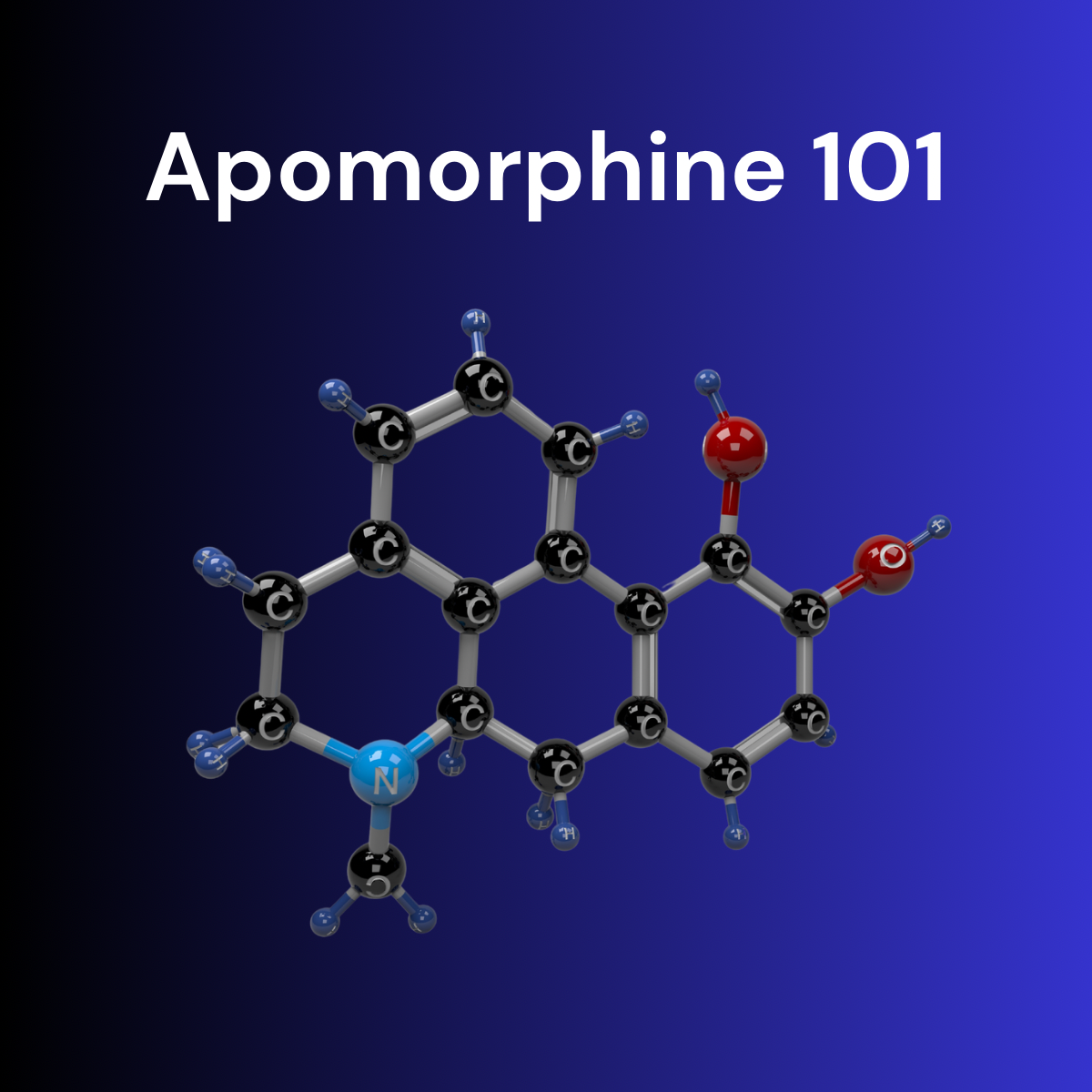
Apomorphine: From Century-Old Drug to Cutting-Edge ED Therapy
What Apomorphine Is, How It Works, and Why It Matters for ED
Apomorphine is a fascinating drug with a long history and a very modern purpose. First synthesized in the mid-19th century, this compound (despite its name) is not an opioid like morphine – instead, it’s a dopamine agonist, meaning it stimulates dopamine receptors in the brain 1. For decades, apomorphine was used in very different ways: as a powerful emetic (to induce vomiting), as a sedative in certain medical treatments, and as one of the first medications for Parkinson’s disease2 . Today, however, apomorphine is gaining attention for something new – helping men with sexual arousal and erectile dysfunction (ED).
What makes apomorphine intriguing in sexual medicine is how it works. Unlike standard ED drugs (like sildenafil or tadalafil) that work directly on blood vessels, apomorphine works in the brain. By activating dopamine pathways involved in sexual interest and arousal, it essentially boosts the brain’s natural signals that trigger an erection . In simpler terms, apomorphine helps “turn on” the neural switch for erections, which in turn allows the body’s physical response to proceed. This central mechanism offers a unique approach for men whose ED may have a neurological or psychological component. Before we dive into how apomorphine improves erections, let’s look at where this drug comes from and the many roles it has played in medicine.
⸻
Apomorphine’s Long Journey: A Brief History and Uses
19th-Century Origins: Apomorphine was first created around 1845 by chemists trying to modify morphine . They found that treating morphine with acid produced this new compound – initially called “sulfomorphide” – which, despite its parent chemical, did not act like an opioid. Early doctors soon discovered apomorphine’s defining effect: it caused profound nausea and vomiting. By 1869 it was being used as an emetic (for example, to purge patients or even in cases of poisoning) . Physicians of that era also tried it for some seemingly unrelated conditions. Notably, British doctor James Hare in 1869 reported using apomorphine to treat alcoholism, leveraging its nausea effect as a form of aversion therapy . In other words, pairing apomorphine-induced sickness with alcohol was an attempt to make patients lose their taste for drinking.
Three Main Roles in Medicine: Over the years, apomorphine found a place in a variety of medical contexts. A recent historical review highlights three primary uses that emerged :
- Emetic3 and Aversion Therapy: Apomorphine’s nausea effect was utilized to empty the stomach in emergencies and even to discourage harmful habits (like alcohol or other drug addiction) by creating negative associations . Some clinics in the early 20th century experimented with apomorphine to sedate addicts and induce vomiting, aiming to “reset” cravings – an approach made famous by writer William S. Burroughs in describing his apomorphine treatment for heroin addiction (though these were anecdotal reports, not rigorous studies).
- Sedative Use: In the late 1800s and early 1900s, apomorphine was tried as a calming agent for various neurological or psychiatric disorders4 . Doctors noted it had a tranquilizing effect in some patients, and it was even used as a sedative in anesthesia practice for a time. Its role in treating mental illness was limited by the crudeness of early trials, but it did see use in conditions like anxiety and even in managing alcohol withdrawal, where its sedative and aversive properties might keep a patient from drinking .
- Parkinson’s Disease Therapy: Perhaps most importantly, apomorphine became the first dopamine-based therapy for Parkinson’s disease5. As early as 1884, a French physician (Dr. Édouard Weil) suggested apomorphine could help the tremors and “shaking palsy” of Parkinson’s . This insight was far ahead of its time – it wasn’t until the 1950s that researchers in the US showed apomorphine could dramatically (if briefly) relieve Parkinsonian rigidity and slowness . Apomorphine works for Parkinson’s because it directly stimulates dopamine receptors, essentially substituting for the missing dopamine in the brain. In modern times, apomorphine has re-emerged as an important rescue medication for advanced Parkinson’s, given by injection or infusion to rapidly counteract “off” episodes (periods when a patient’s usual meds wear off and symptoms return) . In fact, apomorphine is now recognized as the oldest Parkinson’s drug still in use, and it’s widely used in Europe for patients with severe motor fluctuations .
Key Point: By the late 20th century, apomorphine had carved out a niche in treating Parkinson’s disease and was well-known for its ability to induce vomiting. But its role in sexual medicine was not discovered until much later – essentially by accident – and that’s where the story gets interesting for men’s health.
⸻
A Surprise Discovery: Apomorphine’s Effect on Sexual Arousal
It might surprise you to learn that apomorphine’s benefit for erections was initially a side effect in early medical reports. Doctors treating patients with apomorphine (for example, in alcoholism or other disorders) occasionally noted something unexpected: men given the drug sometimes developed spontaneous erections6 . In the mid-20th century, these anecdotes began to circulate in medical literature. Scientists then confirmed the phenomenon in research studies – first in animal experiments (rats given apomorphine showed clear pro-erectile effects), and later in human volunteers . These observations were a clue that dopamine receptors in the brain play a pivotal role in normal sexual function and that stimulating those receptors could overcome certain types of ED 7.
By the 1990s, interest in apomorphine as a potential ED treatment grew. This was around the same time that sildenafil (Viagra) was being developed, but sildenafil works via a completely different mechanism (vascular rather than neural). Apomorphine represented a novel approach: a centrally acting ED drug. Researchers showed that apomorphine, when given in low doses under the tongue, could improve erectile responses to sexual stimuli. Men with psychogenic ED (erectile dysfunction largely due to psychological or neurological factors rather than blood flow issues) were especially responsive – essentially, apomorphine helped “jump-start” their brain’s arousal process.
Early Clinical Use: Apomorphine became the first centrally acting medication approved for ED. At the beginning of the 2000s, sublingual apomorphine was introduced in some markets for treating erectile dysfunction8 . It was sold under brand names like Uprima (Abbott Laboratories) and Ixense (Takeda) in Europe. The typical dose was a small lozenge (2–3 mg placed under the tongue) taken before sexual activity. Because apomorphine works through the brain, it doesn’t create an erection out of nowhere – sexual desire or stimulation is still needed – but it enhances the normal signal that initiates an erection9 . Men usually would take apomorphine about 20 minutes before sex, and it would help produce an erection by the time foreplay or erotic cues occurred.
Clinical Trial Evidence: Large trials were conducted to see how well apomorphine actually worked for ED. In phase III studies with thousands of men, apomorphine showed statistically significant benefits over placebo10 . Some key findings from these trials include:
- Improved Erection Rates: In pooled results, about 54% of attempts at intercourse on the optimal apomorphine dose (4 mg sublingual) resulted in an erection firm enough for penetration, compared to about 34% of attempts on placebo11 . In other words, apomorphine roughly doubled the likelihood of a man achieving a usable erection relative to no treatment.
- Rapid Onset: Apomorphine’s effect tended to kick in quickly – often within 10–25 minutes after dosing12 . This rapid onset is an advantage for spontaneity, similar to or even faster than some oral PDE5 inhibitor pills.
- Successful Intercourse: Overall, around 50% of intercourse attempts were successful when men took 4 mg apomorphine, versus roughly one-third when on placebo13 . This measure (the frequency of completed intercourse) confirmed that apomorphine was helping a significant portion of men consummate sexual activity who otherwise might not have been able to.
These results proved that apomorphine is effective for many men with ED. However, it’s important to note that sildenafil (Viagra) and similar drugs were even more effective for most patients. By the early 2000s, Viagra had exploded in popularity with success rates in the 70–80% range for achieving intercourse, far outpacing placebo. Apomorphine’s more modest ~50% success rate, combined with some side effects (discussed below), meant that it struggled to compete. Indeed, despite apomorphine’s benefits, its commercial life as a standalone ED product was short-lived: Uprima and Ixense were withdrawn from the market by 2004–2006, largely due to competition from PDE5 inhibitors (like Viagra, Cialis, Levitra) which became the dominant ED treatments14 . In the U.S., sublingual apomorphine for ED never gained FDA approval, even though an injectable form (Apokyn®) was approved in 2004 for Parkinson’s15 .
The Bottom Line: Yes – apomorphine works for ED, and it pioneered a new path to treating sexual dysfunction by targeting the brain’s arousal centers. It just couldn’t overcome the blockbuster success of Viagra at the time. Yet, the story doesn’t end there. Modern sexual medicine hasn’t forgotten apomorphine’s unique advantages, and today there’s a resurgence of interest in using it alongside other ED therapies to help men who need an extra boost.
⸻
Key Clinical Evidence: Apomorphine’s Role in Erectile Dysfunction
To put apomorphine’s effectiveness in perspective, let’s briefly review the scientific evidence and where it stands:
- Mechanism Confirmed: Brain imaging and neurophysiology studies have validated that apomorphine enhances the normal erectile response by acting in the hypothalamus (in areas like the paraventricular nucleus and medial preoptic area that govern sexual reflexes) 16. Dopamine activation in these regions triggers downstream signals – including oxytocin release and parasympathetic nerve firing – that relax penile blood vessels and cause erection 17. This central action is what differentiates apomorphine from peripheral ED drugs. One study even showed that apomorphine could provoke erections in male volunteers without any erotic video or direct stimulation, underscoring that it directly engages the CNS pathways of arousal 18.
- Clinical Trial Outcomes: Multiple placebo-controlled trials in men with ED have shown apomorphine’s benefits. A meta-analysis of phase III trials (over 800 men, ages 18–70) found significant improvements in erectile function with sublingual apomorphine 2–4 mg19 . As noted, about half of men on the 4 mg dose were able to have intercourse successfully, versus about one-third on placebo20 . Men reported improved confidence and satisfaction on questionnaires as well. These trials included men with common ED-related conditions (hypertension, diabetes, etc.), suggesting apomorphine can help in typical real-world patients21 . However, men with more severe, organic ED (for instance due to serious vascular disease or after prostate surgery) tended to benefit less from apomorphine than from a drug like sildenafil. Apomorphine is most effective when the primary issue isn’t severe blood flow limitation but rather impaired neural or psychogenic initiation of erections.
- Comparative Efficacy: In direct comparisons, PDE5 inhibitors usually show higher efficacy than apomorphine in achieving strong erections22 . For example, in men with non-arterial ED (normal blood flow but poor erections, often psychological), sildenafil had a higher success rate than apomorphine in one study 23. This doesn’t mean apomorphine fails – just that it might not generate as robust an effect as Viagra for the average patient. Think of apomorphine as adding 20%–30% improvement over placebo in likelihood of good erection, whereas Viagra might add 40%–50% improvement in many cases. That said, apomorphine’s unique action makes it valuable for certain men who cannot take PDE5 drugs or who have ED strongly tied to central arousal problems.
- Use in Special Populations: Researchers have also been curious about apomorphine for other sexual dysfunctions. Some small studies have explored apomorphine in female sexual arousal disorder, given that dopamine is also involved in women’s sexual response24. Results have been mixed and it’s not an approved use, but this illustrates how apomorphine opens a new avenue of treating sexual issues via the brain rather than just the genitals.
- In summary, the evidence base confirms apomorphine as an effective ED treatment, especially useful as a central stimulator of arousal. It is not a first-line monotherapy today only because alternatives are easier and often more potent for broad use. But what if apomorphine could be combined with those alternatives? That’s exactly the idea behind new combination therapies – to get the best of both worlds.
⸻
Side Effects and Safety: What to Expect at Low Doses
All medications have side effects, and because apomorphine works on dopamine (a powerful neurotransmitter), its side effect profile is distinct from drugs like sildenafil. The good news is that at the low doses used for ED, apomorphine’s side effects are generally manageable and short-lived. Clinical trials and decades of use have taught us the following about apomorphine’s safety:
- Nausea and GI Upset: The most common side effect by far is nausea25 26. Apomorphine’s stimulation of dopamine receptors in the brain can trigger the chemoreceptor trigger zone (the area that causes vomiting). Many patients notice mild to moderate nausea after a dose. However, this effect is dose-dependent and often transient. Studies noted that nausea tends to decrease with continued use – as patients take apomorphine a few times, their bodies habituate and the nausea usually becomes milder or goes away27 . Starting with a low dose (e.g. 1.5–2 mg) and gradually increasing can also minimize stomach upset. In some countries, doctors pair apomorphine with anti-nausea medications like domperidone to counter this effect 28, but domperidone is not readily available in the U.S. (and other antiemetics like ondansetron cannot be used with apomorphine due to dangerous blood pressure interactions). The bottom line: a bit of queasiness or yawning is common initially, but serious vomiting is unusual at ED doses.
- Yawning and Dizziness: Apomorphine frequently causes yawning or a feeling of drowsiness – this is actually a known dopaminergic effect (dopamine agonists can trigger yawning reflexes). You might also experience lightheadedness or dizziness, especially when standing up quickly. This is because apomorphine can lower blood pressure (vasodilation), and in combination with any sexual activity (which itself can lower blood pressure slightly due to exertion and arousal), you need to be careful with sudden posture changes2930 . In most cases, any dizziness is mild. Patients are simply advised to rise slowly from sitting or lying down, and avoid drinking alcohol to excess when using apomorphine (alcohol can exacerbate blood pressure drops)31. Serious fainting is rare at these low doses, but caution is warranted if apomorphine is combined with other vasodilators.
- Headache or Flushing: These are less common with apomorphine alone (they’re more typical with PDE5 drugs), but a few men report headache, sweating, or flushing feelings. Again, these tend to be mild. Apomorphine does not typically cause the nasal congestion or vision changes that PDE5 inhibitors can cause, since it’s working via a different pathway.
- No Respiratory Depression or Addiction: Importantly, despite its name, apomorphine has no opiate-like effects. It will not cause respiratory suppression, euphoria, or dependence the way opioids do – it is not related to morphine in its action. In fact, apomorphine can sometimes cause the opposite of euphoria (some patients feel briefly groggy or “off” as it kicks in, due to the slight drop in blood pressure and the nausea). There’s also no evidence of apomorphine causing any kind of chemical addiction or withdrawal. Its “addiction” connection is only historical, in that it was once tested to treat addiction. This is reassuring for patients who may worry about taking something with a morphine-like name.
- Rare Side Effects: At higher doses (or in Parkinson’s patients on long-term therapy), dopamine agonists like apomorphine can sometimes lead to impulse control disorders (e.g. gambling urges, hypersexuality) or movement-related side effects (due to long-term dopamine stimulation)32 . These effects have not been reported as problems in short-term, low-dose use for ED, given the infrequent dosing. Nonetheless, it’s something your doctor would monitor if you were using apomorphine regularly. Allergic reactions are extremely rare. As always, any chest pain or severe symptoms during sexual activity should be taken seriously – but those are more related to the exertion of sex and underlying heart health, not apomorphine itself.
Overall, apomorphine is considered safe at the doses used for sexual dysfunction, provided it’s used under medical guidance. The side effects like nausea and dizziness are usually mild and tolerable, especially after the first few uses. In the original trials, a majority of men were able to continue using it without discontinuation once they found the right dose 33. Patient-empathetic care (like starting low, educating about sitting up slowly, avoiding mixing with alcohol or other drugs) further increases safety. And because apomorphine is taken only as needed, if you don’t like how it makes you feel, it’s out of your system quickly (apomorphine’s effects wear off within a couple of hours).
One safety note: Never combine apomorphine with nitrate medications (just as you shouldn’t with Viagra or Cialis) because the blood pressure drop could be dangerous. Fortunately, nitrates are more of a concern with PDE5 inhibitors; apomorphine alone doesn’t interact with nitrates pharmacologically, but if you’re on nitrates, sexual activity itself might not be advised by your cardiologist. Always review your meds with the prescribing doctor.
⸻
The Shameless Trio: Why Combine Apomorphine with Sildenafil and Tadalafil?
Given apomorphine’s unique benefits and the success of PDE5 inhibitors, it was perhaps only a matter of time before someone asked: why not use them together? The Shameless Trio is exactly that – an innovative ED treatment that includes all three of the following in one regimen:
- Apomorphine – the dopamine agonist we’ve been discussing, for central arousal boost.
- Sildenafil – the classic PDE5 inhibitor (Viagra’s active ingredient) for robust but short-acting improvement in penile blood flow.
- Tadalafil – the longer-acting PDE5 inhibitor (Cialis’ ingredient) for extended support of erectile function over 24–36 hours.
By combining two peripheral vasodilators (one fast-acting, one long-lasting) with a central dopamine stimulator, Shameless Trio aims to address ED on multiple fronts simultaneously. The rationale comes from both scientific theory and some emerging clinical experience:
- Brain + Blood Vessel Synergy: An erection requires both a signal from the brain and a response in the penis. Apomorphine takes care of the signal; sildenafil/tadalafil take care of the response. When used together, they reinforce each other – apomorphine ensures the sexual desire and neural firing are present, while the PDE5 inhibitors ensure the penile tissue can respond maximally to those signals by trapping blood effectively. One animal study demonstrated this synergy clearly: apomorphine injections in rats increased erection-related blood pressure in the penis, and giving sildenafil on top significantly enhanced and prolonged that effect34. In other words, the combo produced better erections than apomorphine alone. This kind of result suggests that 1 + 1 can equal 3 when it comes to mixing central and peripheral ED therapies.
- Rescuing Partial Responders: Not all men respond fully to a single medication. Some men get a partial erection with Viagra but not enough for intercourse; others might get some effect from apomorphine but still struggle with firmness. Case reports have emerged of men who failed to get adequate results from either drug alone, but achieved satisfactory erections when both pathways were engaged together35 . In such patients, the combination can be a game-changer. They might take a low-dose daily tadalafil to keep a baseline level of readiness, and then use a sildenafil+apomorphine troche before sex for the added boost. This approach has been so promising in select cases that compounding pharmacies and clinics (like Shameless Care) are offering combination formulations for those who need them36 .
- Scientific Support for PDE5 Combos: While combining two PDE5 inhibitors is not common in routine practice (and should never be done without medical supervision), research indicates it can be beneficial for men with severe ED. For instance, a clinical trial in 2014 tested daily tadalafil 5 mg plus on-demand sildenafil 50 mg versus tadalafil alone in men with difficult-to-treat ED37 . The combination significantly improved erectile function scores and intercourse success, especially in men with more severe baseline ED, without increasing side effects3839 . This suggests that a “dual therapy” can safely provide better results in hard cases. The Shameless Trio essentially extends that concept by adding apomorphine into the mix as well, thereby covering the neurochemical aspect of arousal in addition to maximizing the physical aspect.
- Short-Term and Long-Term Coverage: Including both sildenafil and tadalafil means the treatment can yield an initial strong effect (sildenafil peaks in an hour or less) and maintain erectile responsiveness for a day or more (tadalafil’s extended half-life)4041 . Men often appreciate tadalafil for allowing more spontaneity (since it stays in your system, you don’t have to time intercourse as precisely). By having some tadalafil on board, a man using the Trio might achieve erections later that night or the next morning more easily as well. Sildenafil, meanwhile, ensures that even within 30–60 minutes of taking the dose, there is enough PDE5 inhibition to support a firm erection when apomorphine triggers the desire. Essentially, sildenafil is the quick muscle, tadalafil is the endurance, and apomorphine is the spark that ignites the whole process.
Of course, when combining three medications, safety is paramount. Shameless Care’s formulation of the Trio is carefully calibrated – typically using lower doses of each component than if they were used alone. This is done to minimize additive side effects. For example, instead of a full 100 mg Viagra dose, the combo might include a moderate sildenafil dose alongside tadalafil. Medical oversight is also critical: our physicians screen for contraindications (such as heart conditions or other medications that would make this combination unsafe). Patients are monitored and educated about symptoms like lightheadedness – which, if they occur, usually mean the dose can be adjusted.
Why Include Apomorphine?
Because it can help men who otherwise might not respond adequately even with maximum PDE5 therapy. Apomorphine adds the central nervous system stimulation that PDE5 drugs lack. This is particularly useful in men whose ED has a strong psychogenic component (e.g. performance anxiety, where the brain’s inhibition needs to be overcome) or in men with conditions like diabetes where the nitric oxide signaling is impaired – apomorphine can compensate somewhat by increasing neural drive, and then the PDE5 inhibitors amplify whatever nitric oxide is released in the penis42 . By pairing dopamine-driven neurotransmitter release with sildenafil/tadalafil-driven vascular smooth muscle relaxation, Shameless Trio addresses both major elements of erection physiology4344 . This two-pronged strategy can yield better outcomes for certain patients than either approach alone.
It’s worth noting that using apomorphine with sildenafil does mean a bit more caution about blood pressure (as discussed, both can lower BP). But with sensible dosing and avoiding other blood pressure-lowering drugs or excessive alcohol, most healthy men tolerate the combination well 45 46. In fact, authoritative sources note that while traditionally only one ED agent is used at a time, taking two different ED medications can be an acceptable, physician-guided strategy when the benefits outweigh the risks 47. The Shameless Trio is built on that principle – it’s a tailored solution for men who need something more potent and are properly counseled on its use.
⸻
So, Is Apomorphine a Game-Changer for ED?
Apomorphine’s story is a testament to medical science’s creativity. A drug developed over 150 years ago, once used to make people vomit or calm tremors, is now helping men achieve fulfilling sex lives. Does apomorphine work for ED? The evidence says yes – it significantly improves erectile function in many men, especially when low libido or psychological hurdles are part of the problem 48 49. By awakening the brain’s arousal pathways, it addresses a gap that standard ED pills don’t touch.
On its own, apomorphine may not have replaced Viagra, but in combination therapies like the Shameless Trio, it’s proving extremely valuable. Men who had lost hope after trying everything else are finding that this comprehensive approach – simultaneously targeting mind and body – can finally get their sex life back on track. And even for men who respond to PDE5 inhibitors okay but want to optimize their performance, adding a low-dose apomorphine could enhance the quality of erections and the subjective feeling of arousal.
Patient-Empathetic Perspective: If you’re considering a treatment like apomorphine, it’s normal to have questions or concerns. It’s an older drug with a somewhat unfamiliar name, and the idea of taking three different medications for ED might sound intimidating. But remember, each component of the Shameless Trio plays a specific role, and they have been used safely in countless patients. Our healthcare providers will ensure you understand how to use it, what side effects to watch for, and how to personalize the dose to your needs. There’s no one-size-fits-all in sexual medicine – that’s why having more tools (like apomorphine) in the toolkit is so important. For the man who needs it, apomorphine can make the difference between a frustrating night and a satisfying one.
In the end, apomorphine’s revival in the context of ED is all about giving men and their partners another reason to hope. It reinforces a simple truth: sexual dysfunction is complex, involving both the head and the heart (and other organs a bit lower). With therapies that acknowledge this complexity – blending psychological and physiological support – we move closer to treatments that feel natural, holistic, and highly effective. The Shameless Trio is one such approach, and apomorphine is a key part of its success. An old drug with new tricks, apomorphine reminds us that sometimes the breakthroughs in sexual health come from the unlikeliest places – even a 19th-century lab.
Footnotes/Citations
- https://go.drugbank.com/drugs/DB00714 ↩︎
- https://pmc.ncbi.nlm.nih.gov/articles/PMC5995787/#:~:text=armamentarium%20has%20been%20tortuous%20and,work%20in%20neuroprotection%20or%20addiction ↩︎
- https://pmc.ncbi.nlm.nih.gov/articles/PMC5995787/ ↩︎
- https://pubmed.ncbi.nlm.nih.gov/11035390/ ↩︎
- https://pmc.ncbi.nlm.nih.gov/articles/PMC5995787/ ↩︎
- https://www.empowerpharmacy.com/compounding-pharmacy/sildenafil-apomorphine-hcl-troche/#:~:text=medial%20preoptic%20area,4 ↩︎
- https://pubmed.ncbi.nlm.nih.gov/11035390/ ↩︎
- https://pmc.ncbi.nlm.nih.gov/articles/PMC5995787/ ↩︎
- https://pubmed.ncbi.nlm.nih.gov/15206909/ ↩︎
- https://pmc.ncbi.nlm.nih.gov/articles/PMC5995787/ ↩︎
- https://pubmed.ncbi.nlm.nih.gov/11035390/ ↩︎
- https://www.empowerpharmacy.com/compounding-pharmacy/sildenafil-apomorphine-hcl-troche/#:~:text=Apomorphine%E2%80%99s%20dopaminergic%20profile%20confers%20predictable,9 ↩︎
- https://pubmed.ncbi.nlm.nih.gov/11035390/ ↩︎
- https://www.empowerpharmacy.com/compounding-pharmacy/sildenafil-apomorphine-hcl-troche/#:~:text=Apomorphine%E2%80%99s%20dopaminergic%20profile%20confers%20predictable,9 ↩︎
- https://www.drugs.com/drug-interactions/apomorphine-with-sildenafil-224-0-2061-0.html#:~:text=Apomorphine%20and%20sildenafil%20may%20have,about%20all%20other%20medications%20you ↩︎
- https://www.drugs.com/drug-interactions/apomorphine-with-sildenafil-224-0-2061-0.html#:~:text=Applies%20to%3A%20apomorphine ↩︎
- https://www.empowerpharmacy.com/compounding-pharmacy/sildenafil-apomorphine-hcl-troche/#:~:text=Apomorphine%E2%80%99s%20dopaminergic%20profile%20confers%20predictable,9 ↩︎
- https://pubmed.ncbi.nlm.nih.gov/11035390/#:~:text=and%2016,International%20Journal%20of ↩︎
- https://pubmed.ncbi.nlm.nih.gov/10210444/#:~:text=Results%3A%20%20Apomorphine%20produced%20rhythmic,100 ↩︎
- https://www.empowerpharmacy.com/compounding-pharmacy/sildenafil-apomorphine-hcl-troche/#:~:text=late%201990s%20within%20503A%20community,2 ↩︎
- https://pubmed.ncbi.nlm.nih.gov/24387078/#:~:text=This%20study%20aimed%20to%20evaluate,in%20combined%20medication%20group%20were ↩︎
- https://pubmed.ncbi.nlm.nih.gov/24387078/#:~:text=safety%20was%20assessed%20by%20observing,Our ↩︎
- https://pubmed.ncbi.nlm.nih.gov/24387078/#:~:text=combined%20medication,for%20patients%20with%20severe%20ED ↩︎
- https://www.empowerpharmacy.com/compounding-pharmacy/sildenafil-apomorphine-hcl-troche/#:~:text=Sildenafil%20%2F%20Apomorphine%20HCl%20Troches,may%20assist%20prescribers%20managing%20erectile ↩︎
- https://www.empowerpharmacy.com/compounding-pharmacy/sildenafil-apomorphine-hcl-troche/#:~:text=Apomorphine%2C%20in%20contrast%2C%20crosses%20the,and%20central%20neurotransmitter%20release%2C%20a ↩︎
- https://www.empowerpharmacy.com/compounding-pharmacy/sildenafil-apomorphine-hcl-troche/#:~:text=Apomorphine%2C%20in%20contrast%2C%20crosses%20the,ED%20or%20attenuated%20NO%20signaling ↩︎
- https://www.empowerpharmacy.com/compounding-pharmacy/sildenafil-apomorphine-hcl-troche/#:~:text=medial%20preoptic%20area,4 ↩︎
- https://www.empowerpharmacy.com/compounding-pharmacy/sildenafil-apomorphine-hcl-troche/#:~:text=spontaneous%20erections%20without%20audiovisual%20erotic,ED%20or%20attenuated%20NO%20signaling ↩︎
- https://www.drugs.com/drug-interactions/apomorphine-with-sildenafil-224-0-2061-0.html#:~:text=Apomorphine%20and%20sildenafil%20may%20have,about%20all%20other%20medications%20you ↩︎
- https://www.drugs.com/drug-interactions/apomorphine-with-sildenafil-224-0-2061-0.html#:~:text=category%20to%20be%20taken%20concurrently,the%20%27erectile%20dysfunction%20agents%27%20category ↩︎
- https://pubmed.ncbi.nlm.nih.gov/11035390/#:~:text=and%2016,International%20Journal%20of ↩︎
- https://pmc.ncbi.nlm.nih.gov/articles/PMC5995787/#:~:text=Spontaneous%20apomorphine,However%2C%20despite ↩︎

